

Our services
What a VR therapy programme actually looks like.
A VR therapy programme at Better Relief VR pairs a purpose-built clinical platform with a certified in-clinic technician. You put on a headset; the technician runs the session from a control tablet, choosing and adjusting the environment or exposure scenario in real time while you experience only the therapeutic content.
We deliver two distinct clinical platforms across three programme families: pain & comfort, mental health, and aging & rehab, covering sixteen conditions in total. Every session happens in our Barrie, Ontario clinic. No referral is required.
The four service lines
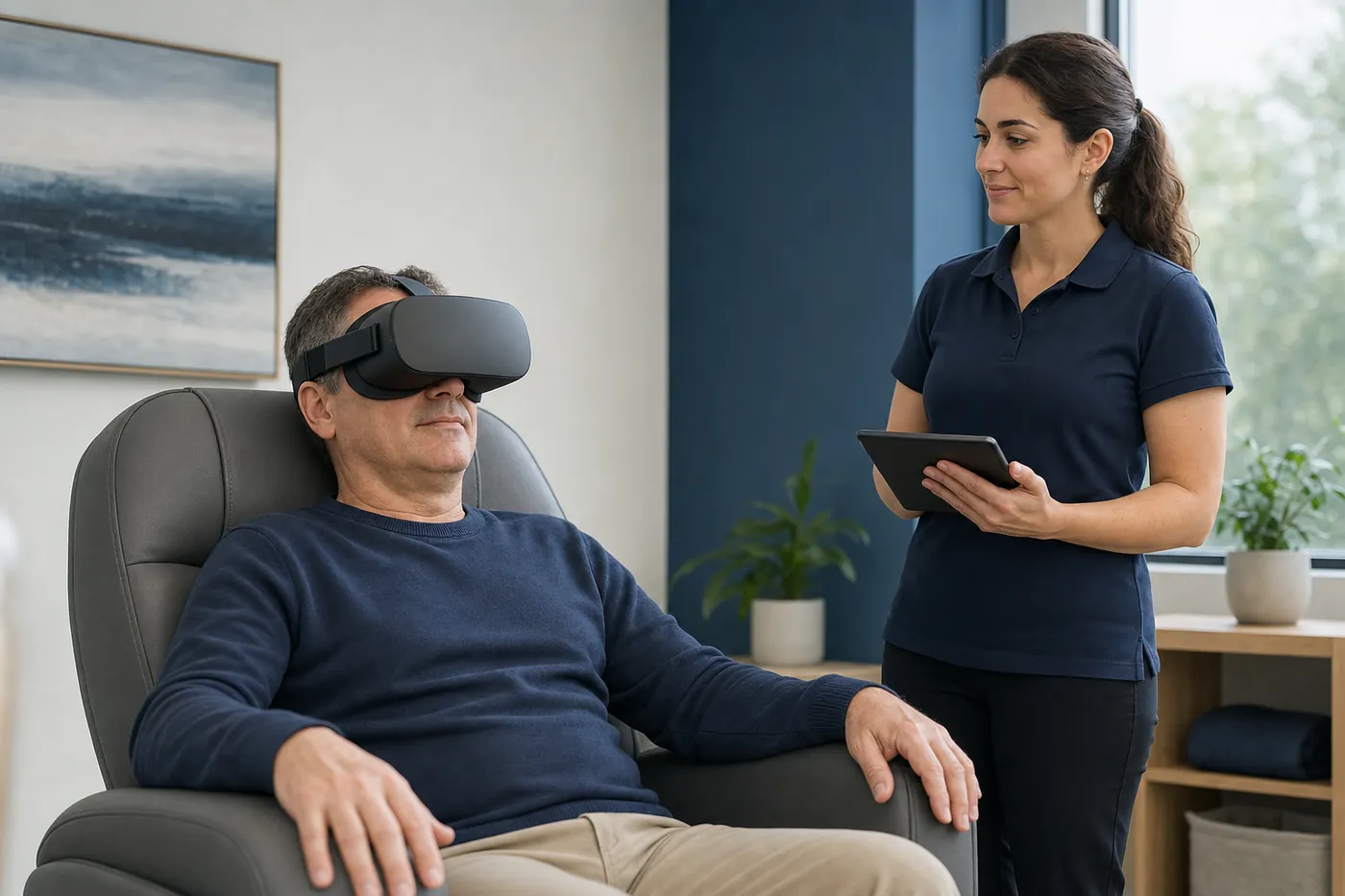
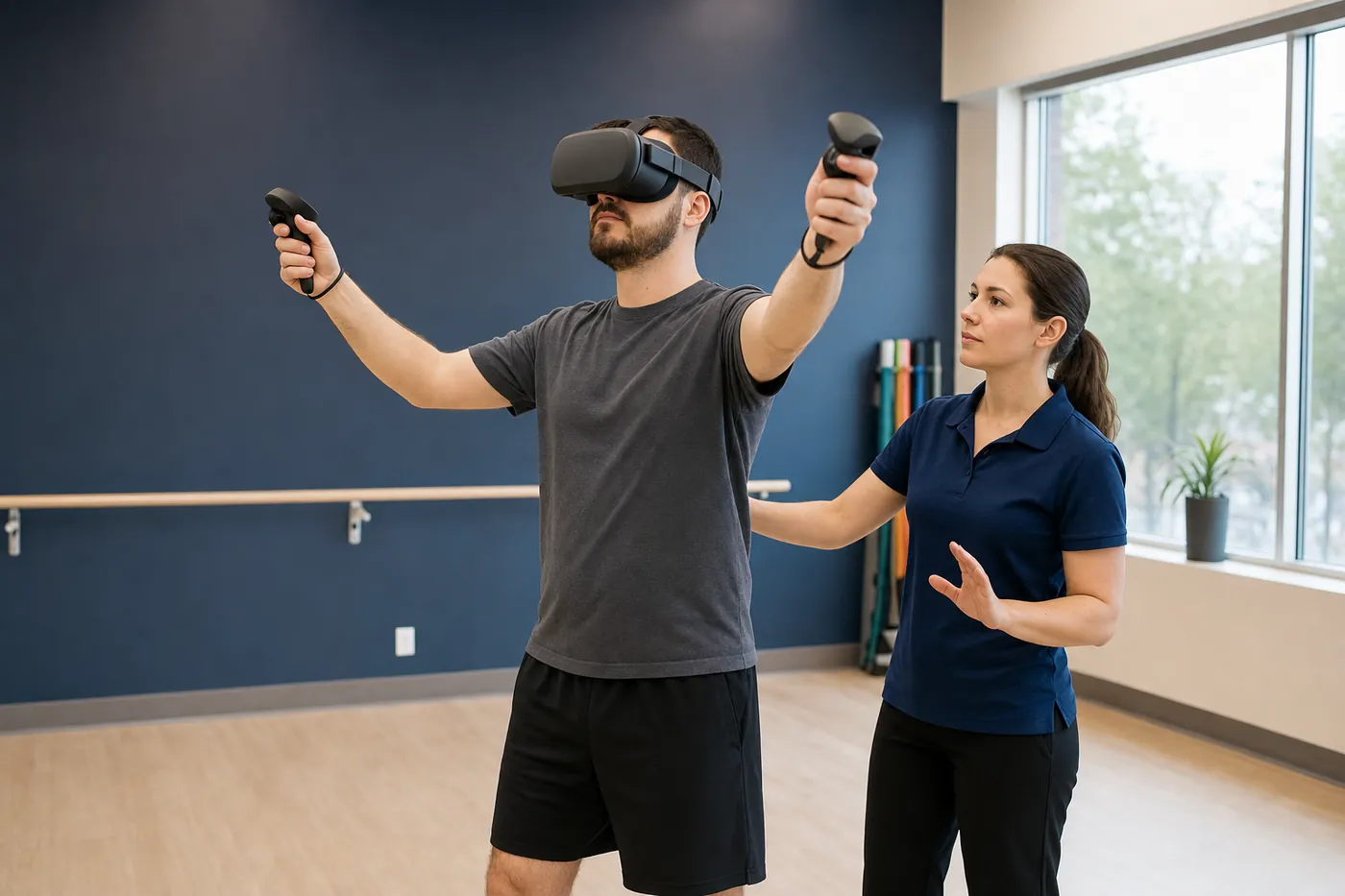
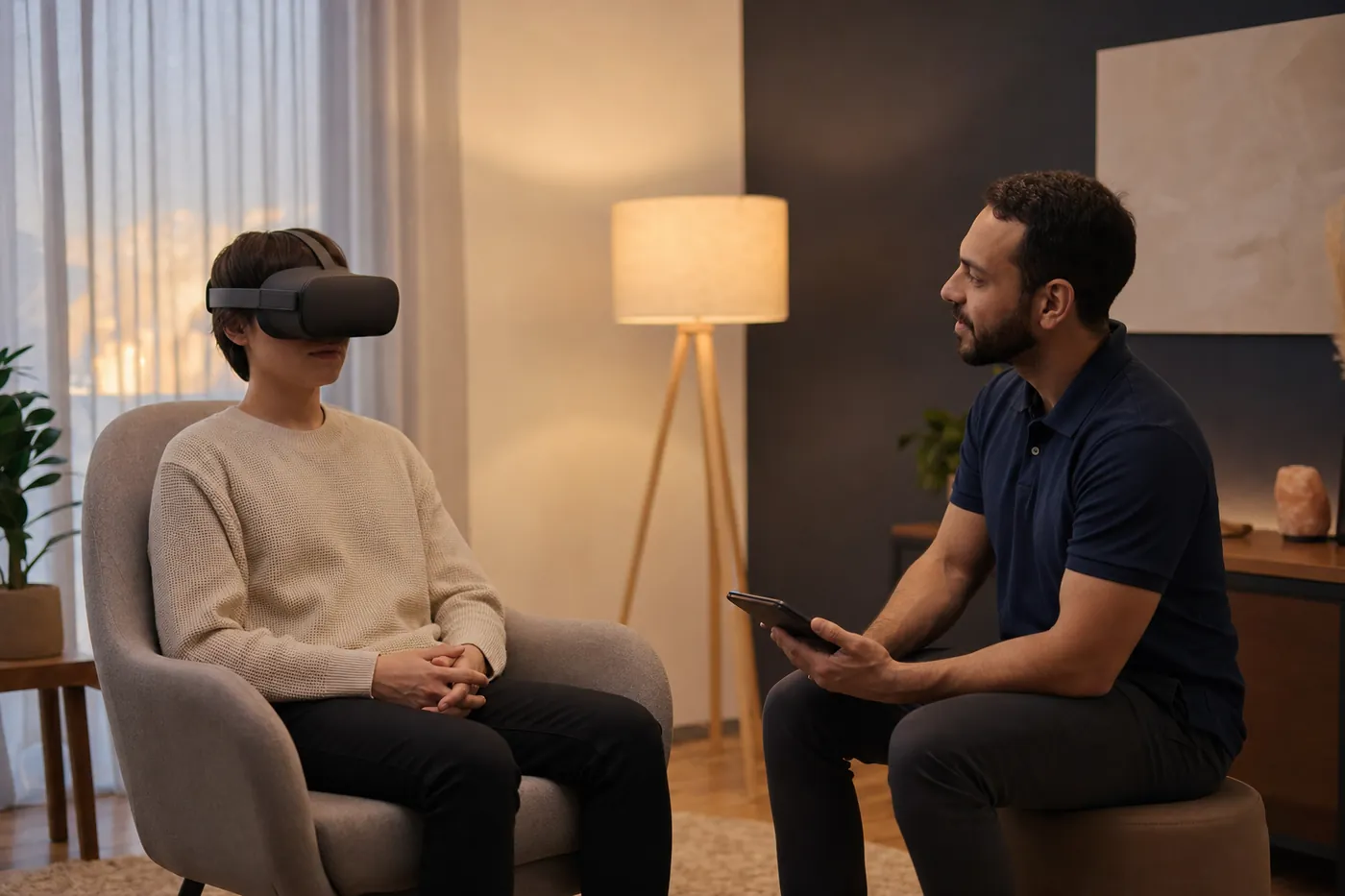
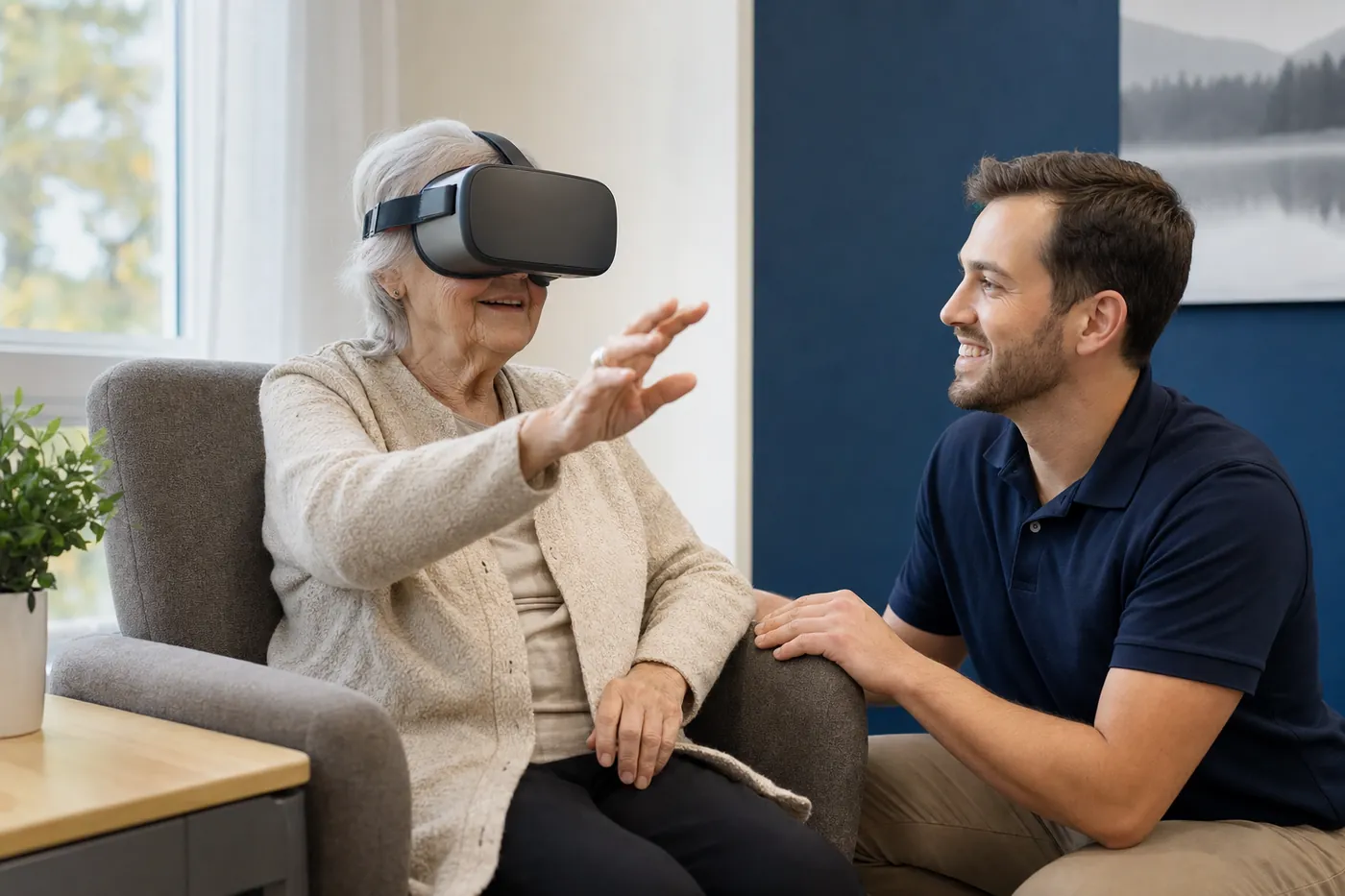
What services does Better Relief VR offer?
Better Relief VR offers four VR therapy service lines at its Barrie clinic: chronic pain management, physical rehabilitation, mental health support, and cognitive engagement and geriatric care. Each has its own typical protocol length, agreed with you at your initial assessment and adjusted as you progress.
Service line 01
Chronic pain management
For lower back pain, musculoskeletal pain, and neuropathic pain. Delivered on the Mynd Immersive engine using distraction and calming, goal-based content.
Typical protocolAssessment, plus 8 to 12 supervised sessions, plus maintenance
Service line 02
Physical rehabilitation
For orthopedic recovery and neurological rehabilitation. Goal-based PT, OT, and ST activities on the Mynd Immersive engine, aligned to your therapist's goals.
Typical protocolAssessment, plus 6 to 10 sessions, plus progress review
Service line 03
Mental health support
For anxiety, stress-related disorders, and PTSD-adjacent presentations. Delivered on the PsyTech VR engine under the supervision of a licensed or certified healthcare professional.
Typical protocolAssessment, plus 6 to 12 sessions, plus follow-up
Service line 04
Cognitive engagement & geriatric care
For elderly cognitive stimulation, balance, and connection. Reminiscence and recreation content on the Mynd Immersive engine, with families and caregivers involved where helpful.
Typical protocolAssessment, plus 4 to 8 sessions, plus caregiver review
Programme family 01
Does VR therapy actually help with chronic pain?
Mynd Immersive engineOur pain and comfort programme uses the Mynd Immersive platform, built around distraction, reminiscence, and calming, goal-based content, to redirect attention away from pain and discomfort and to support agitation and palliative comfort. It is not an exposure-therapy platform: the aim here is to shift focus and ease distress, not to confront a fear.
Chronic pain
For long-standing pain that hasn't responded fully to other approaches, the technician selects a calming or absorbing 360° environment (nature scenes, travel, guided breathing) designed to redirect attention away from pain signals for the duration of the session.
Who it suitsPeople managing ongoing pain who are looking for a non-drug approach to use alongside their existing care plan.
Technician's roleMonitors the session live on the control tablet, adjusting the content if discomfort or disorientation increases.
Acute & procedural pain
For short-term pain during or around a procedure, an immersive distraction environment is used to hold attention elsewhere while the discomfort passes, drawing on the same distraction-therapy approach Mynd applies across its content library.
Who it suitsAnyone facing a brief but uncomfortable procedure who wants an additional, non-pharmacological way to manage the moment.
Technician's roleTimes the session to the procedure and switches environments if a particular scene isn't landing well.
Agitation & restlessness
For episodes of distress, pacing, or sundowning, the technician chooses calm, focused, low-stimulation content aimed at settling and re-orienting attention: the same "behavioral" category Mynd uses to support emotional regulation.
Who it suitsPeople experiencing agitation related to cognitive change, hospital stays, or unfamiliar environments.
Technician's roleWatches for signs of overstimulation and keeps sessions short and gentle where needed.
Palliative comfort
For people in palliative or end-of-life care, sessions draw on reminiscence, travel, faith-based, and nature content intended to support comfort, connection, and quality of life rather than any treatment outcome.
Who it suitsPatients and families seeking moments of comfort, connection, or closure as part of palliative support.
Technician's roleWorks with the patient and family to choose meaningful content and keeps sessions unhurried.
Programme family 03
Can VR therapy support older adults and people in physical rehabilitation?
Mynd Immersive engineOur aging and rehabilitation programme uses the same Mynd Immersive platform as our pain and comfort programme, delivering reminiscence, recreation, and goal-oriented therapy content built specifically with older adults and people in active rehab in mind.
Dementia & memory care
Reminiscence experiences revisit meaningful places and eras (a childhood home, a past vacation, familiar music) to spark conversation, recognition, and a sense of identity.
Who it suitsPeople living with dementia or memory changes, and their families, looking for moments of connection.
Technician's roleChooses content matched to the person's history and watches for engagement or distress on the control tablet.
Parkinson's engagement
Gentle, motivating recreational activities, described in Mynd's own materials as helping when "nothing stimulating the imagination" is left in a routine, encourage reaching, movement, and sustained attention without the repetition of standard exercises.
Who it suitsPeople with Parkinson's looking for engaging ways to stay active and stimulated.
Technician's roleSelects recreation or movement-based content and adjusts pacing to the person's ability on the day.
Rehabilitation (PT/OT/ST)
Physical, occupational, and speech therapy exercises are turned into interactive, goal-oriented activities: practising everyday tasks like making coffee or grocery shopping in a safe virtual setting to support functional progress.
Who it suitsPeople working through physical, occupational, or speech therapy who want rehab to feel like progress rather than repetition.
Technician's roleRuns activities aligned to your therapist's goals and tracks engagement session to session.
Isolation & loneliness
Shared immersive experiences (travel, recreation, connection with caregivers) reconnect people with the world outside and with the people caring for them.
Who it suitsPeople experiencing isolation, including those in long-term or post-acute care settings.
Technician's roleCan run sessions individually or in small groups, guiding shared activities and conversation.
The evidence
What does the published research say about VR therapy?
Mynd Immersive reports a 47% average reduction in pain intensity and PsyTech VR reports that 90% of participants preferred VR exposure to traditional therapy, each figure attributed and sourced below. These figures come from studies conducted by the platform developers and their research partners, not from Better Relief VR, and we publish them with their sources so you can read them yourself.
47%
Average reduction in pain intensity (DVPRS)
Reported by Mynd Immersive from U.S. Department of Veterans Affairs VISN 4 data. source
60%
Average reduction in distress (SUDS)
Reported by Mynd Immersive from U.S. Department of Veterans Affairs VISN 4 data. source
100%
Of those tested experienced a decrease in agitation
Reported by Mynd Immersive from U.S. Department of Veterans Affairs VISN 4 data. source
37.39%
Average reduction in anxiety (STAI-S-5)
Multi-site VA study across nine Pennsylvania medical centres, reported by Mynd Immersive. source
88%
Success reducing isolation
Reported by Mynd Immersive, citing CMS-funded research. source
90%
Of participants preferred VR exposure to traditional therapy
University of Georgia study of 45 participants, reported by PsyTech VR. source
150+
Evidence-based phobia scenarios in the platform library
Reported by PsyTech VR. source
Please read this carefully. The statistics above are published by the platform developers and their research partners and describe those studies, not outcomes measured at Better Relief VR. Individual results vary. Virtual reality therapy is used to complement care. It does not replace medical treatment, medication, or advice from your physician. Neither platform holds a Health Canada medical device licence. PsyTech VR holds FDA establishment registration (Owner/Operator 10095803, Listing D598351). This is not FDA clearance or approval of the software as a medical device. VR is not suitable for everyone: people with epilepsy or photosensitive seizure disorders, severe vertigo or motion sensitivity, or active psychosis should speak with our team before booking.
Inside the headset
What therapeutic techniques does Better Relief VR use?
Better Relief VR delivers each programme through a specific set of techniques built into one of our two platforms: distraction therapy, graded exposure, reminiscence therapy, goal-based PT/OT/ST, and personalised safe-place environments. Here's what each one actually involves.
Distraction therapy
Calming or engaging 360° environments redirect attention away from pain, anxiety, or clinical discomfort. Used for acute, procedural, and chronic pain support.
MyndGraded exposure
Fear- or trigger-related scenarios are introduced gradually, with the clinician controlling intensity and pacing throughout. This is the core method behind our phobia, PTSD, OCD, and addiction work.
PsyTech VREMDR bilateral stimulation
Visual, sound, and controller-based bilateral stimulation delivered inside the headset, with adjustable movement speed and pacing, used as part of trauma-focused work.
PsyTech VRReminiscence therapy
Revisiting meaningful places, eras, and memories (a childhood home, a past trip, familiar music) to foster reflection, connection, and a sense of identity in memory care and palliative settings.
MyndGuided breathing & progressive muscle relaxation
Structured breathing exercises and muscle-group relaxation practice, delivered in peaceful VR environments, used across both platforms for stress and tension reduction.
Both enginesGoal-based PT/OT/ST activities
Physical, occupational, and speech therapy exercises reframed as interactive goals: practising everyday tasks in a safe virtual setting to support functional progress and rehabilitation.
MyndPersonalised "safe place" environments
An AI-generated calming scene built from your own description (a forest, a lake, a cozy cabin) with ambient motion and sound, used for grounding and relaxation before or after exposure work.
PsyTech VR
How it works
What happens during a VR therapy session at Better Relief VR?
A VR therapy session at Better Relief VR follows four steps: screening and consultation, programme match, an in-headset session with a certified technician, and a debrief. Every programme, regardless of which platform it runs on, follows this same basic shape, from an initial screening conversation through to reviewing how you responded.
STEP 01
Screening & consultation
We talk through what you're dealing with, review relevant history, and check for contraindications such as epilepsy or photosensitive seizure disorders, severe vertigo or motion sensitivity, or active psychosis.
STEP 02
Programme match
We match you to the platform and programme family that fits your goals (pain and comfort, mental health, or aging and rehab) and agree what a session should focus on.
STEP 03
In-headset session
A certified technician fits the headset, launches the chosen environment or scenario from the control tablet, and monitors your response throughout, adjusting intensity, pausing, or switching content as needed.
STEP 04
Debrief & review
We check in immediately after the session, note how you responded, and use that to shape the next session or adjust the overall programme.
Get started
Ready to find the right programme?
Book a no-obligation consultation at our Barrie clinic. We'll talk through your goals, check that VR therapy is appropriate for you, and recommend the programme family that fits. Call 647-224-5900 or email info@betterrelief.ca.
1 Quarry Ridge Rd, Unit 207, Barrie, Ontario L4M 7G1 · Serving Simcoe County · No referral required