

The Science
How VR therapy is
How VR therapy is
thought to work.
Virtual reality doesn't treat a condition by itself. It changes what the brain is paying attention to, and lets a clinician deliver a graded, repeatable experience that would be hard to create any other way. This page sets out the proposed mechanisms, the published evidence behind them, and, just as importantly, what that evidence does not show.
Certified in-clinic provider. Every figure below is attributed to its source, not to us
The mechanisms
How is VR therapy thought to work?
VR therapy is not one intervention: it is a delivery method for several different, well-studied psychological and behavioural principles, such as distraction, graded exposure, and reminiscence, each with a different level of evidence behind it in VR specifically. Some of these mechanisms are decades old and well-established outside VR. Others are newer applications of an established idea, still being tested specifically in VR. We label each one so you know which is which.
Attentional load & gate control (pain distraction)
Well-establishedThe brain has a limited capacity for attention. Immersive, multisensory environments compete with pain signals for that capacity, and gate-control theory suggests engaging non-painful sensory input can reduce how much pain signal reaches conscious awareness. This is the mechanism behind Mynd Immersive's "Distraction" content category, used for procedural and chronic pain support.
Graded exposure & habituation (anxiety, phobias)
Well-establishedExposure therapy, gradually and repeatedly confronting a feared stimulus in a safe, controlled setting until the fear response habituates, is one of the most evidence-backed approaches in clinical psychology. VR exposure therapy delivers this via realistic, adjustable scenarios instead of real-world or purely imaginal exposure, which is the basis of PsyTech VR's phobia and anxiety scenario library.
EMDR bilateral stimulation
Established therapy, emerging in VREye Movement Desensitization and Reprocessing (EMDR) is a recognised trauma therapy that uses alternating left-right stimulation while a patient recalls a distressing memory. PsyTech VR delivers this bilateral stimulation (visual, audio, and controller-based) inside a headset. EMDR itself is well-studied; delivering it specifically through VR hardware is a newer application still being evaluated.
Reminiscence & cognitive engagement (dementia)
Emerging evidenceReminiscence therapy, prompting recall of meaningful past experiences to support mood, identity and connection, is an established, low-risk approach in dementia care. Mynd Immersive's reminiscence and cognitive content applies this through immersive 360° places and guided activities. Evidence specific to VR delivery in dementia populations is still building and samples are typically small.
Embodied, goal-directed movement (rehabilitation)
Emerging evidenceTurning a repetitive physiotherapy, occupational therapy or speech therapy exercise into a goal-directed game can increase how much of a session a patient actually engages with, which is a recognised lever for rehab outcomes generally. Mynd Immersive's OT/PT/ST modules apply this principle. Whether VR specifically improves functional outcomes versus standard rehab exercises is still an active research question.
AI-generated exposure & "safe place" environments
Emerging, least studiedPsyTech VR can generate a custom exposure scene or calming "safe place" from a short text description. The underlying ideas (personalised exposure and guided relaxation imagery) are established; generating them on demand with AI is new, and the pilot studies of this specific feature (see below) are the smallest and earliest-stage evidence on this page.
The published evidence
What evidence supports VR therapy's efficacy?
The evidence supporting VR therapy comes from vendor-published figures such as Mynd Immersive's reported 47% average reduction in pain intensity and PsyTech VR's reported 90% participant preference for VR exposure over traditional therapy, not from independent outcomes measured at Better Relief VR. Each row below names the platform, the population studied, the sample size where the vendor discloses one, the instrument used, and links to the original source so you can read it yourself.
Figure
What it measures
Instrument
Population / n
Source
47%Mynd Immersive
Average reduction in pain intensity
DVPRS
US veterans, VA VISN 4 (sample size not disclosed by vendor)
60%Mynd Immersive
Average reduction in distress
SUDS
US veterans, VA VISN 4 (sample size not disclosed by vendor)
100%Mynd Immersive
Of those tested, experienced a decrease in agitation
Vendor-reported
US veterans, VA VISN 4 (sample size not disclosed by vendor)
37.39%Mynd Immersive
Average reduction in anxiety
STAI-S-5
Multi-site VA study, nine Pennsylvania VA medical centres (n not disclosed per-centre)
88%Mynd Immersive
Success reducing isolation (CMS-cited)
Vendor-reported
Senior living residents, Indiana / CMS-funded pilot (n not disclosed on this page)
90%PsyTech VR
Preferred VR exposure therapy to traditional therapy
Preference survey
University of Georgia study, ages 18-25, n = 45
150+PsyTech VR
Evidence-based phobia scenarios in the library
Catalogue count
Not a clinical outcome. A content-library figure
Read this before you read the numbers again
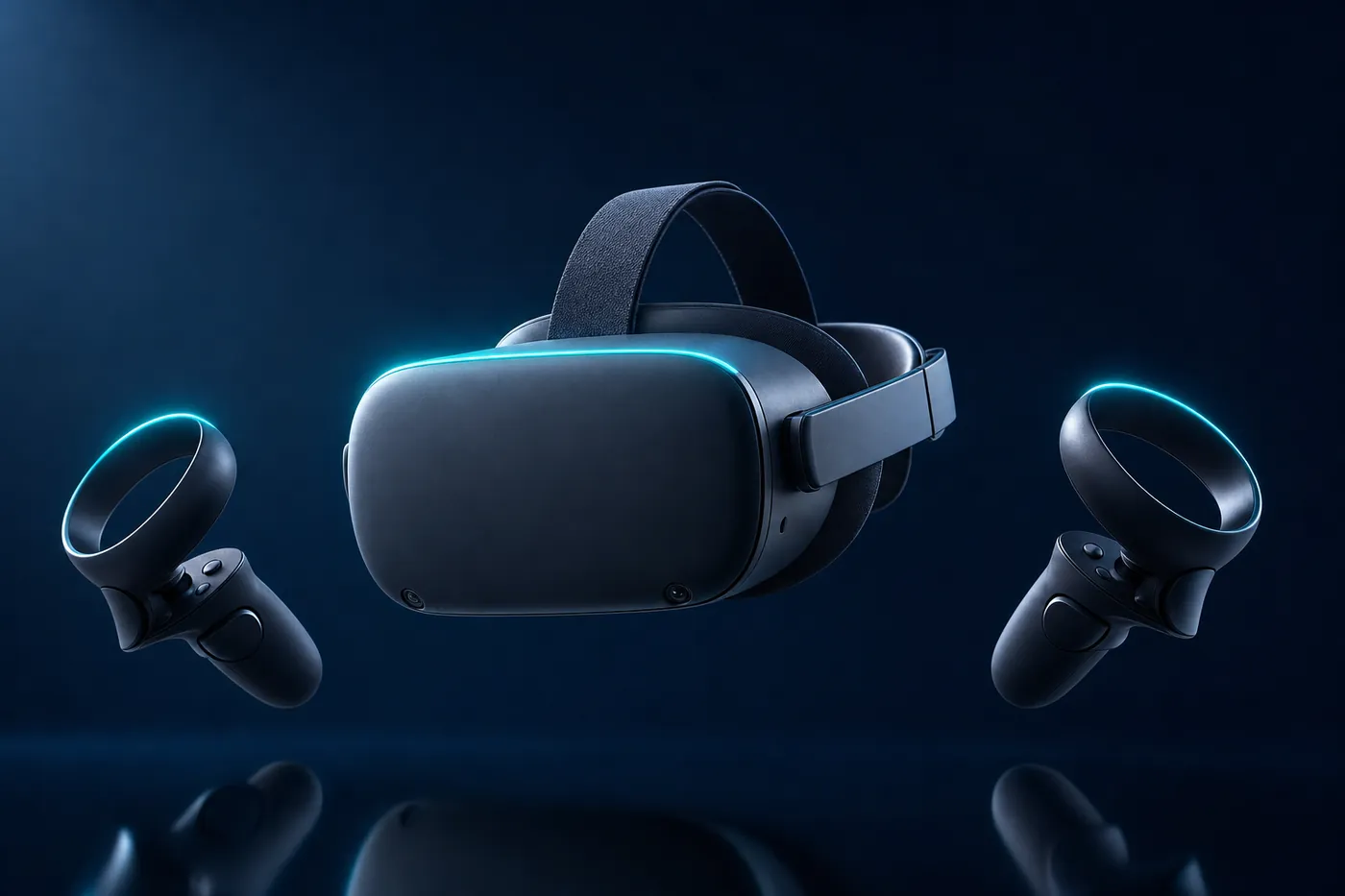 Equipment used in-session, illustrative photograph
What does the published evidence not show?
The published evidence does not show independent peer review, large sample sizes in every study, results specific to a Canadian civilian population, or Health Canada or FDA clearance of either platform as a medical device. Here is what we think a sceptical reader should weigh against every figure above.
Equipment used in-session, illustrative photograph
These are vendor-published figures, not independent peer review
Every statistic above comes from the platform vendor's own website or press release. None of them link to a peer-reviewed journal article with a visible DOI. That doesn't make them false, but it means they haven't been through independent scientific scrutiny the way a published clinical trial would be.
Some of the underlying samples are small
The PsyTech VR preference figure (90%) comes from a University of Georgia study of 45 participants: informative, but too small to generalise broadly. Where a vendor has not disclosed a sample size at all, we say so rather than guessing.
Specific populations may not generalise
Most of Mynd Immersive's headline figures come from studies of US veterans through VA facilities. Veterans differ from the general population in age, health status, trauma history and care setting. Results seen in that group may not transfer directly to every patient we see in Barrie or Simcoe County.
Neither platform holds a Health Canada medical device licence
We have not found, and do not claim, Health Canada authorisation for either PsyTech VR or Mynd Immersive. They are used here as wellness and therapeutic-support tools alongside your existing care, not as licensed medical devices.
PsyTech VR's FDA status is registration, not clearance
PsyTech VR is registered with the FDA as a device establishment (Owner/Operator 10095803, Listing D598351). That is an administrative registration, not FDA clearance or approval of the software as a medical device. We're careful never to conflate the two.
VR complements care, it doesn't replace it
Nothing on this page should be read as a substitute for medical treatment, medication, therapy or your physician's advice. Both platform developers describe their own tools as complements to existing care, and so do we.
Contraindications & safety
Who should not use VR therapy?
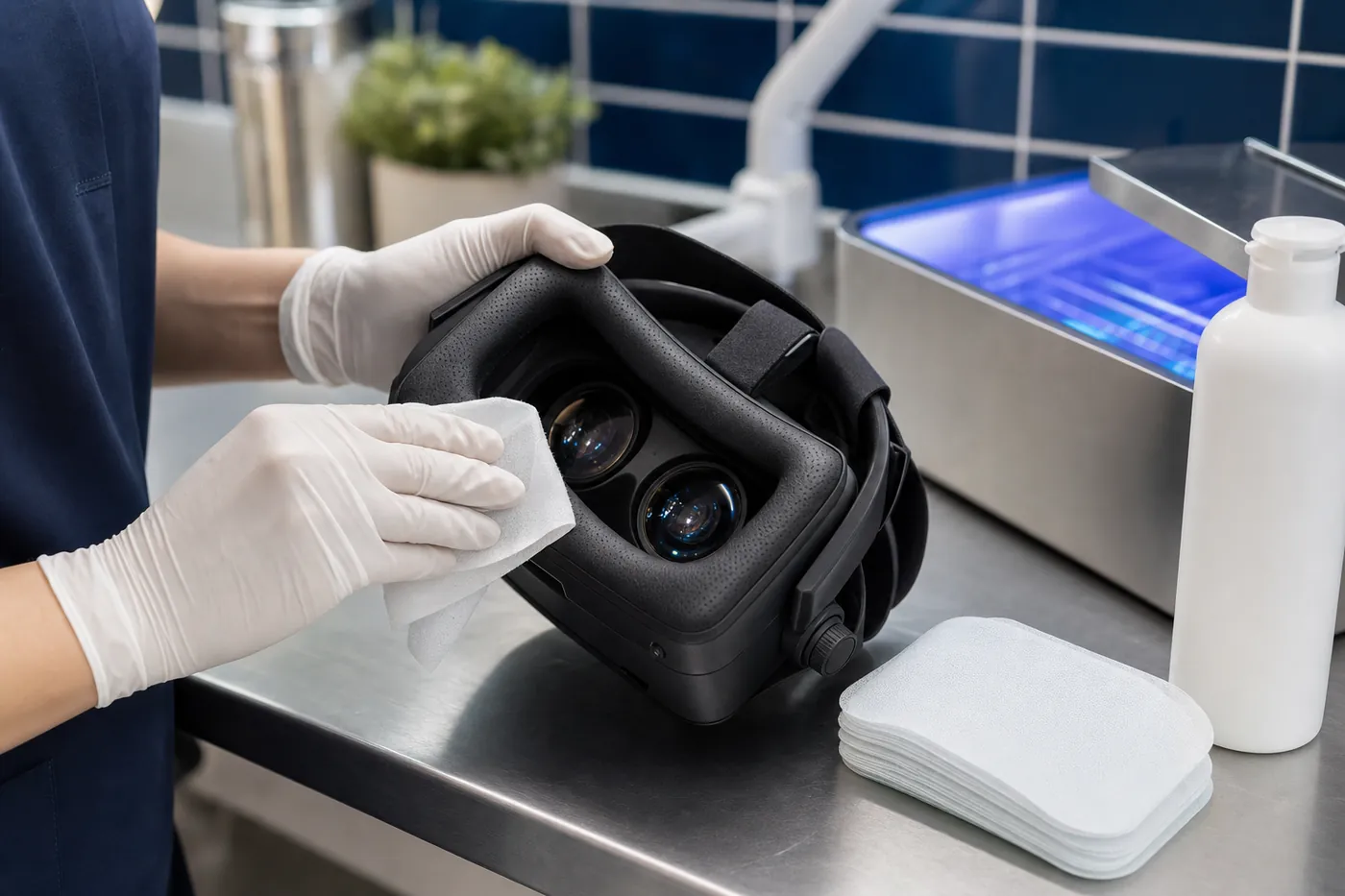
VR therapy is not appropriate for people with epilepsy or photosensitive seizure disorders, severe vertigo or motion sensitivity, or active psychosis. We screen for these conditions before every first session, and our technicians are trained to stop a session immediately if something doesn't feel right.
Known contraindications
- Epilepsy or photosensitive seizure disordersSome VR systems can trigger seizures in susceptible individuals via flashing or rapidly changing light.
- Severe vertigo or motion sensitivityHeadset use can provoke or worsen cybersickness in people who cannot tolerate the mismatch between visual and physical motion.
- Active psychosisImmersive, difficult-to-distinguish-from-real environments carry added risk for people who are currently having trouble distinguishing virtual from real experiences.
How we screen for this
- A short health screening questionnaire before your first session, covering seizure history, inner-ear or balance conditions, and current mental health status.
- A certified technician stays with you for the full session and can pause or end it immediately if you feel unwell.
- Session intensity, duration and content are adjusted to your tolerance. Nothing is fixed or one-size-fits-all.
- If you're unsure whether VR is appropriate for you, tell us during booking. We'd rather ask in advance than find out mid-session.
Further reading
Where can I read the primary sources myself?
You can read the primary sources for every statistic on this page directly on the Mynd Immersive and PsyTech VR websites, linked below. We'd rather you read these pages yourself than take our summary on trust.
Please read this carefully. The statistics on this page are published by the platform developers (PsyTech VR and Mynd Immersive) and their research partners, and describe those specific studies. They are not outcomes independently measured at Better Relief VR. They are vendor-published summaries, not independent peer-reviewed publications. Individual results vary and past results, including those from US veteran populations, do not guarantee similar results for any individual patient. Virtual reality therapy is used to complement your existing care. It does not replace medical treatment, medication, psychotherapy, or the advice of your physician or care team. Neither PsyTech VR nor Mynd Immersive holds a Health Canada medical device licence. PsyTech VR's FDA status is an establishment registration (Owner/Operator 10095803, Listing D598351), which is not the same as FDA clearance or approval. VR is not suitable for everyone: people with epilepsy or photosensitive seizure disorders, severe vertigo or motion sensitivity, or active psychosis should discuss this with our team before booking a session.
Have questions before you book?
Bring your questions. We'd rather you ask them than wonder.
If you want to talk through whether VR therapy is appropriate for your situation, or a family member's, before committing to anything, our team is happy to walk through the evidence and the screening process with you.
Barrie, Ontario · Serving Simcoe County and the surrounding area · No referral required · Sessions supervised by certified technicians